Can You Have Cataract Surgery If You Have Macular Degeneration?
The short answer is yes, you can have cataract surgery if you have age-related macular degeneration (AMD). The real question is whether cataract surgery will actually help your vision or not if you have AMD. The answer to that question is “probably, yes,” but it would be helpful to define what cataracts and AMD are to understand why that is.
To answer why you can probably have cataract surgery if you have macular degeneration, we’ll look at:
- Establishing the reason for your vision loss
- Can cataract surgery worsen AMD?
- Understanding macular degeneration and cataracts
AMD and cataracts can severely affect your quality of life. By understanding these factors, you’ll be much better prepared to make an informed decision and possibly regain some of your lost vision.
Establishing the Reason for Your Vision Loss
AMD and cataracts both negatively affect our ability to see but in different ways. AMD inhibits our ability to make out finer details while cataracts cause blurry vision. When combined, they result in severe vision loss that can greatly diminish your quality of life.
Will cataract surgery help restore some lost vision for those with AMD? Probably, but other factors are at play that your ophthalmologist will want to take into consideration.
First and foremost , your ophthalmologist will want to establish what’s causing the majority of your vision loss—AMD or cataracts. Unfortunately, some who have experienced significant vision loss due to AMD won’t get much benefit from cataract surgery.
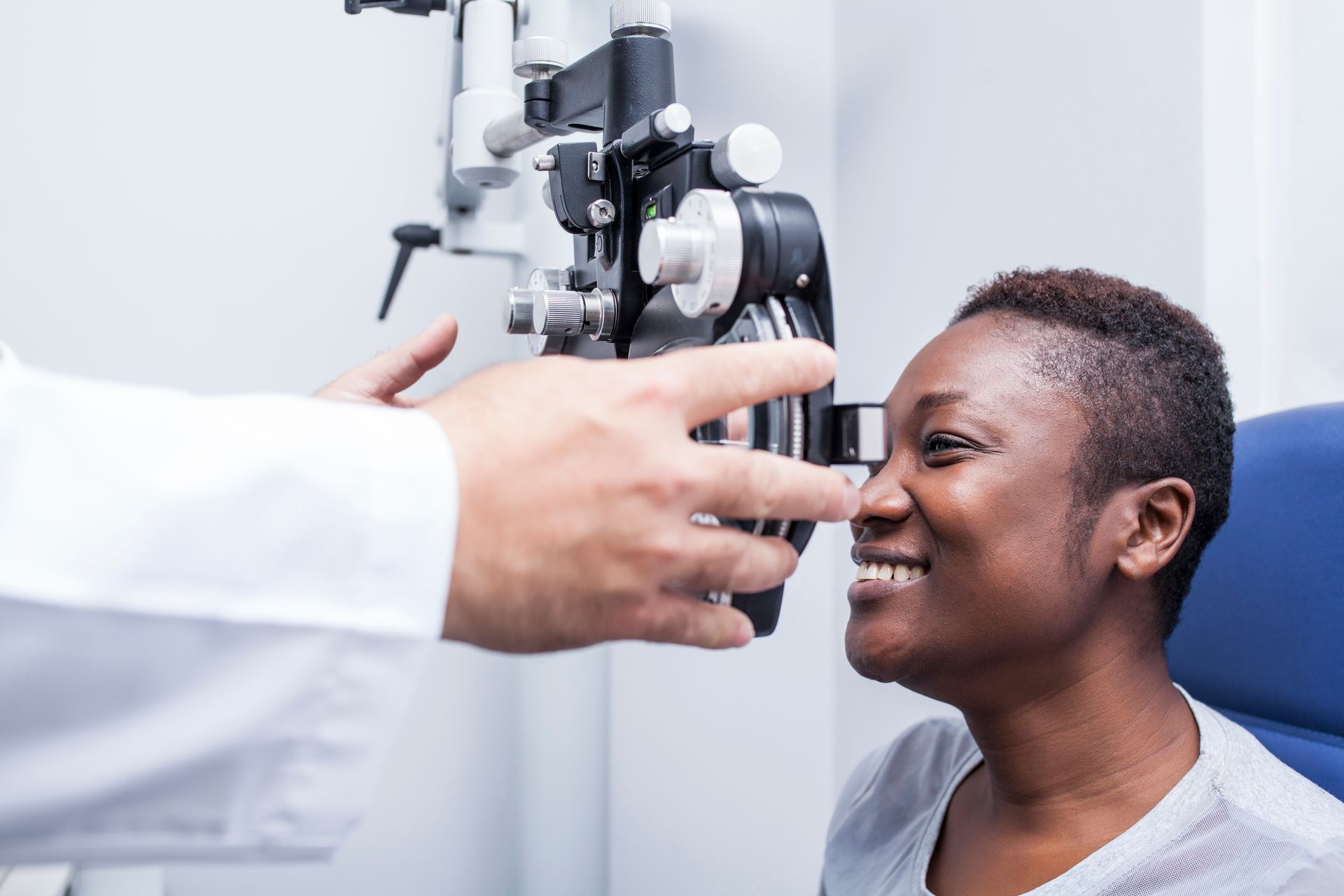
To figure out which is causing the majority of your vision loss, your ophthalmologist will want to examine your retina and lens to evaluate their condition. They will take photos of your retina and examine your lens to see how clouded it is.
Keep in mind that cataract surgery may not be your ophthalmologist’s first choice of treatment. Instead, they may want to see if a new eyeglass prescription or low vision magnifiers will do the trick.
While removing the cataract will help more light get into your eye, it may not be enough to restore your central vision, which is affected by AMD. Sharp, clear vision requires a healthy retina and an unclouded lens.
Can cataract surgery worsen AMD?
This is an important question that many AMD-sufferers ask. After all, no one wants to undergo a procedure that will make their condition worse!
To answer this question, you first need to know that there are two types of AMD:
- Dry AMD
- Wet AMD
So far, there hasn’t been any evidence that dry AMD will be worsened by cataract surgery. Evidence is less consistent for wet AMD . The inside of the eye becomes inflamed due to cataract surgery, which could possibly worsen wet AMD.
On a more positive note, those with AMD who qualify for cataract surgery can experience better vision even with the combined conditions of cataracts and AMD. It’s also unlikely that you’ll develop either form of AMD after cataract surgery if you don’t already have the condition.
Understanding Macular Degeneration and Cataracts
Now that we’ve established the facts of cataract surgery and AMD, let’s take a closer look at the two conditions to get a better understanding of how they work. By gaining a better understanding of their differences, you can also better understand why cataract surgery may help some people with AMD while not helping others with the condition.
Macular Degeneration
AMD is a retinal problem that occurs when the macula has been damaged. Located at the center of the retina, the macula allows you to make out finer details such as written words and faces.
This is also known as central vision . When your central vision has been damaged, you’ll find it difficult to see fine details regardless of whether they’re close or far away. On the other hand, your peripheral vision (side vision) will remain intact.
We know that AMD comes in two forms—dry and wet. Dry AMD is the more common of the two, affecting roughly 80% of people who develop AMD. Dry AMD is caused by the thinning of the macula as you age. Unfortunately, experts haven’t developed a way to treat AMD as of yet.
While less common, wet AMD is much more serious than its dry counterpart. It occurs when the body starts producing new, unhealthy blood vessels below the retina that leak fluids such as blood. This results in scarring of the macula and vision loss much sooner than you would with dry AMD.
Regardless of the form of AMD you may develop, common factors for both are:
- Being over 50
- Being caucasian
- Having high blood pressure
- Having high cholesterol
- Being overweight
- Having too much saturated fat in your diet
- Having heart disease
- Being a smoker
Most people don’t know they have AMD until their vision has become blurred. It’s important that you start getting comprehensive eye exams regularly to catch symptoms before they become a serious problem.
Cataracts
Cataracts cause the lens of the eye to become clouded, resulting in poor vision. Think of it like a windshield. Clean windshields are easy to see through. Dirty windshields are difficult to see through and can result in accidents. Likewise, a cloudy lens makes it much harder to see. The difference here is you can’t run your eyes through an eyewash to make them clean again.
Symptoms of cataracts include:
- Blurred vision
- Sensitivity to light
- Double vision
- Poor night vision
- Colors that used to be bright now seem faded
Most people develop cataracts as they get older. Aging results in natural changes to our eyes that begin around 40 years old. This involves the natural proteins in our eyes breaking down which results in our vision becoming more “cloudy.” Cloudiness from cataracts usually becomes noticeable around 60, though it may take years for problems to manifest.
While age plays the biggest role in developing cataracts, there are other variables that can have an effect on your chances of developing the condition. These include:
- Genetics
- Other medical issues such as diabetes
- Previous eye surgeries or injuries
- Radiation exposure to your upper body
- Use of certain medications
- Prolonged sun exposure without eye protection from UV rays
The speed at which cataracts develop is determined by their cause and doctors are unable to predict how quickly they will develop. We do know that cataracts due to old age develop over a long period of time. On the other hand, they can develop more quickly in diabetics and younger people.
You may be able to slow down your development of cataracts. This can be done by avoiding prolonged UV exposure to your eyes and wearing sunglasses that have UV protection .
Baptist Eye Surgeons is an ophthalmological practice in Knoxville, TN, and Morristown, TN. Visit our website to meet our doctors and learn more about our specialties, or give us a call at 865-579-3920 for more information or to schedule an appointment .