Corrective Eyelid Surgery — Your Ultimate Guide
Eyelids that are heavy and sagging can feel embarrassing, causing you to look and feel older than you actually are. While they may make you look older and tired, drooping eyelids can lead to another problem — impaired vision. While you can work around them for a time, you’ll eventually need corrective eyelid surgery so that you can see clearly and safely. In this guide, we’ll explore the different aspects of eyelid surgery so you can be prepared for your appointment.
We’ll look at:
- Corrective vs. Cosmetic Eye Surgery: What’s the Difference?
- Droopy Eyelids: The Bridge Between Cosmetic and Corrective Eyelid Surgery
- What causes droopy eyelids?
- Droopy eyelid surgery
- Is surgery for droopy eyelids covered by insurance?
- Preparing for & recovering from corrective eyelid surgery
Corrective vs. Cosmetic Eye Surgery: What’s the Difference?
There are many types of eye surgeries available, but what’s the difference between corrective and cosmetic eye surgery? What it really comes down to is their purpose — does it improve functionality and vision, or does it improve the way your eyes look?
Corrective Eyelid Surgery
Corrective eyelid surgery helps restore your vision and the functionality of your eye. They can reshape the cornea, replace the lens, or remove excess material from your eyelids so they don’t droop. This form of eye surgery can even be necessary to prevent vision loss or blindness.
Corrective eyelid surgery is often used for eye problems such as:
- Ptosis (droopy eyelids impairing vision)
- Dermatochalasis (excess skin on upper eyelids impairing vision)
- Entropion (eyelid turning in)
- Ectropion (eyelid turning out)
- Retraction (upper eyelid too high, or lower eyelid too low)
- Lagophthalmos (inability to full close the eyelid)
- Reconstruction after removal of eyelid cancer
Cosmetic Eye Surgery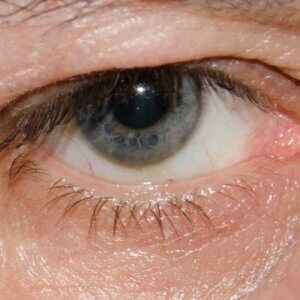
Cosmetic eye surgery helps to restore your appearance and isn’t medically necessary. While not necessary for preserving your sight or restoring the functionality of the eye, these forms of surgery are some of the most popular in the United States.
According to the American Society of Plastic Surgeons , the four most common types of cosmetic surgery are:
- Breast augmentation
- Liposuction
- Nose reshaping
- Cosmetic eyelid surgery
Cosmetic procedures don’t always have to be surgical. Facial filler injections are another popular way to revitalize the skin around your eyes. Popular brands of facial fillers include Juvéderm , Restylane, and Belotero.
Botox is another common cosmetic option if you’re wanting to restore your youthful glow. It works by undermining the muscle contraction process that causes wrinkles, causing them to become more relaxed and skin to be smooth.
Droopy Eyelids: The Bridge Between Cosmetic and Corrective Eyelid Surgery
Sometimes an eyelid problem can be considered both cosmetic and corrective. Droopy eyelids are the perfect example of this since they can affect your appearance as well as your ability to see clearly. Also known as blepharoplasty , eyelid surgery can be used to treat both problems.
Eyelid surgery can be cosmetic if you’re wanting to get rid of:
- Bags under your eyes
- Fatty deposits that cause puffy eyelids
- Drooping lower eyelids
- Fine wrinkles and excess skin
On the other hand, eyelid surgery can be corrective and functional if your eyelids droop so much that it impairs your vision. This loose, sagging skin can become so heavy that it hangs in front of your eyes and makes it hard to see. It’s at this point that sagging eyelids are no longer simply a cosmetic issue and become medically necessary for your own safety.
Click here to learn more about the differences between corrective and cosmetic eye surgery!
What Causes Droopy Eyelids?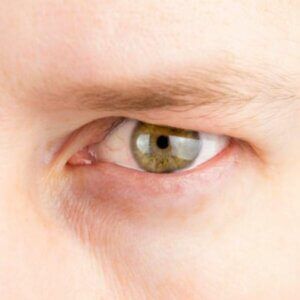
Heavy, drooping eyelids are a bigger problem than needing to catch up on your sleep. It can actually be caused by two different medical conditions that can have a drastic effect on your ability to see safely. Understanding dermatochalasis and ptosis can help you have a better grasp of what’s actually causing your drooping eyelids.
Dermatochalasis (Excess Skin)
Dermatochalasis is defined as the “redundancy and laxity of the eyelid skin and muscle”. It’s more prevalent in elderly people but does occur in younger adults from time to time.
The sagging skin is caused by a combination of:
- Gravity
- Weakened eyelid connective tissues
- Loss of elastic tissue
While frequently found in the upper eyelids, it’s common in the lower eyelids as well.
Ptosis (Muscle Weakness)
“Ptosis” refers to drooping eyelids more generally , but it also has qualities that make it unique from excess skin. Namely:
- The muscles that raise the eyelid become weak
- Damage to nerves that control the eyelid muscles
- The skin of the upper eyelids becomes loose
Ptosis occurs when the levator muscle or muller’s muscle in your eyelid become weak, causing it to droop. While usually the result of aging ( acquired/involutional ptosis ), it can also be present at birth ( congenital ptosis ) or caused by other medical conditions such as migraines, paralysis, autoimmune diseases, and nerve damage.
How They Affect Your Vision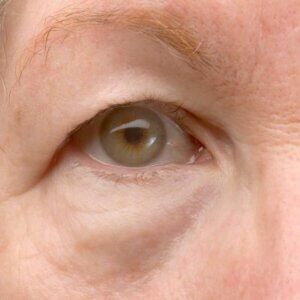
Drooping eyelids can influence how others perceive you by making you look older, tired, or even sad. While no one wants to be seen this way, a bigger concern is how they impair your peripheral vision , which is your ability to see out of the corner of your eyes while looking straight ahead. This occurs due to eyelids blocking light from entering the corners of your eyes.
Many people with droopy eyelids, whether it’s caused by excess skin or muscle weakness, find ways to cope with it for a while. This may be by raising their eyebrows to move the eyelid upwards or by tilting their head back to see under them.
While this can work for a time, it can eventually lead to other problems such as:
- Dry eye
- Headaches
- Dermatitis
- Eye irritation
Your best choice to get rid of sagging eyelids and prevent other symptoms is to seek medical treatment from an oculoplastic surgeon. Surgical treatments can vary depending on whether you have dermatochalasis or ptosis. Regardless of what’s causing your drooping eyelids, our surgeons can help get rid of the droop and restore your vision.
For more on the causes of droopy eyelids and how they affect your vision, click here !
Droopy Eyelid Surgery
Your surgical options for drooping eyelids will depend on what’s causing your particular case. For instance, blepharoplasty is used to treat droopy eyelids caused by excess skin while ptosis is treated with ptosis repair .
Whatever your eye surgeon recommends, you can be confident that you’ll be able to see clearly again. This means no longer raising your eyebrows or tilting your head to read, watch TV, or talk to loved ones. Driving becomes much safer thanks to restored peripheral vision, as well. You may also notice your eyes looking younger and more rejuvenated after surgery.
Blepharoplasty
Blepharoplasty can be cosmetic or corrective and involves removing the excess skin and fat from your upper eyelids. It’s also a popular cosmetic treatment for lower eyelids.
As Dr. Andew Anzeljc , our own oculoplastic surgeon, explains:
Blepharoplasty is either a cosmetic or functional procedure when done on the upper lids to remove excess skin and fat that’s either cosmetically bothersome or interfering with one’s vision. It can also be done on the lower lids for purely cosmetic reasons to improve the appearance of the lower lids.
Ptosis Repair
Ptosis repair involves shortening or tightening the eyelid muscles in order to “raise” them.
According to Dr. Anzeljc, “Ptosis repair is a surgery aimed at lifting a droopy eyelid and it can be performed in two different ways. It can be from either an incision or scar on the outside of the eyelid or it can be performed by the undersurface of the eyelid where you see no visible scar.”
What Are the Differences Between Blepharoplasty and Ptosis Repair?
While the goals of droopy eyelid surgery are similar, there are also some important differences. Dr. Anzeljc feels that it’s important to understand that blepharoplasty is specifically dealing with:
- Extra skin
- Extra creases
- Extra folds
These additional parts of the eyelid hang over the eye and can feel embarrassing. However, they can be dangerous if they’re affecting your vision. In this instance, you’re basically removing some combination of skin and fat.
Ptosis, on the other hand, can be a more involved procedure. As he explains, “The typical procedure involves going down to one of the two main muscles that lift the eyelid up and actually either shortening or tightening those muscles so that the lid starts at a higher point.”
How Do I Know if I Need Blepharoplasty or Ptosis Repair?
Blepharoplasty and ptosis repair can be performed on a cosmetic basis if your eyelids are bothering you. You can have these procedures performed on an elective basis for cosmetic reasons.
With that said, Dr. Anzeljc cautions patients who may be suffering from diminished vision due to drooping eyelids. As he explains, “If your eyelids are drooping, either the skin of the upper lid is drooping so much that it’s interfering with peripheral vision when you’re performing daily activities, or the lid itself is drooping to that level, then you should have the procedure done.”
Does Corrective Eyelid Surgery Require a Long Stay In the Hospital?
Corrective eyelid procedures don’t take that long to perform. For instance, having surgery on all four lids takes only around two hours. These procedures don’t require a lengthy stay in the hospital, so you can plan to return home soon after your procedure has been completed.
Corrective eyelid surgery can be performed in a variety of locations, such as an:
- Office setting
- Ambulatory outpatient surgery center
- Hospital setting
With corrective eyelid surgery, you can restore your vision without worrying about long stays in the hospital.
Click here to learn more about how droopy eyelids are treated!
Is Surgery for Droopy Eyelids Covered By Insurance?
Procedures are considered to be medically necessary if you’re having problems with your vision. Our surgeon will work with your insurance when your procedure isn’t for cosmetic reasons and is to restore the functionality of your eye.
To learn more about insurance and corrective eyelid surgery, click here !
Preparing for & Recovering From Corrective Eyelid Surgery
Once you’ve decided to get corrective eyelid surgery then the next step is to prepare . You’ll also need to know how to recover correctly in order to have the best results possible. To help prepare you for the procedure, your surgeon will want to discuss your personal medical history as well as what your expectations are.
Click here to download our ebook to learn more about eye surgery!
Preparing for Corrective Eyelid Surgery
Your personal medical history is important since it gives your surgeon an idea of your current health. Oculoplastic surgeons will want to know about previous surgeries as well as past or current conditions such as:
- Dry eyes
- Glaucoma
- Allergies
- Circulatory issues
- Diabetes
- Thyroid problems
They will also want a list of any medications, herbal supplements, and vitamins that you take. Finally, it’s important to let them know if you smoke, drink, or use drugs.
Your surgeon will help you set realistic expectations for your surgery. To do this, be honest with them as you explain your goals and motivations for undergoing corrective eyelid surgery so they can help prepare for a satisfactory result. Your surgeon will also want to give advice on what type of procedure would work best to help you achieve your goals.
You will also undergo a series of exams to help assist in surgery as well as ensure the procedure is covered by your insurance. This includes:
- A physical exam to measure parts of your eye and test your tear production
- A vision exam to test your vision, including peripheral vision
- Eyelid photography to help plan the surgery and assess any immediate or long-term effects
You’ll also be given a list of medications to stop taking that are associated with an increased risk of bleeding. Your surgeon will inform you of how long to stop taking them before your procedure. It is ideal to stop smoking for several weeks before surgery since it can affect your ability to heal.
It’s also important to have someone available to drive you to and from surgery. You should ask someone to stay with you the first night following your procedure.
Recovering from Corrective Eyelid Surgery
You’ll spend some time in the recovery room once your procedure is finished. This is important to monitor for any immediate complications from surgery. Once you’ve been cleared, you can be driven home to recover.
There are some common side effects that can occur following eyelid surgery. These are temporary, but it’s good to be aware of them.
Temporary side effects may include:
- Pain or discomfort
- Blurry vision
- Light sensitivity
- Puffy eyelids
- Numb eyelids
- Watery eyes
- Double vision
- Swelling or bruising
Your surgeon will give you a list of steps to follow to aid in your recovery process. To prepare, make sure to have plenty of ice packs for your eyes when you get home. You will also need to clean your eyelids with prescription eye drops or ointment.
Make sure to avoid any strenuous activities such as:
- Swimming
- Aerobics
- Jogging
- Heavy lifting
If you smoke then you’ll need to continue not smoking until given the okay (though smoking is always bad for your vision and overall health). Don’t rub your eyes and stick to glasses for about two weeks following your procedure if you wear contact lenses. You should also wear tinted glasses to protect your eyelids from the sun and wind.
It’s recommended that you sleep with your head raised above your chest for the first few days after surgery. You should also use plenty of cold compresses to help fight swelling. If you have stitches, you’ll return to your doctor’s office after a few days to have them removed. As with preparing for surgery, avoid certain medications during recovery to prevent bleeding.
Do you need surgery for droopy eyelids? Contact us today to schedule your appointment!
Corrective surgery is different from cosmetic surgery since it’s for functionality rather than looks. Eyelid surgery can be for cosmetic reasons, but corrective surgery is required if your eyelids are interfering with your vision. Droopy eyelids have one of two causes — excess skin (dermatochalasis) or muscle weakness (ptosis). The surgery you receive will depend on the cause of your drooping eyelids with excess skin requiring blepharoplasty and ptosis requiring ptosis repair.
Procedures for sagging eyelids are covered by insurance as long as they’re proven to interfere with your sight. You can prepare yourself for surgery by reading our downloadable ebook . Before surgery, you will meet with your surgeon and answer questions about your medical history, goals, and undergo exams to help them prepare for the procedure. You’ll also need to follow your surgeon’s instructions carefully to recover quickly and safely.
Baptist Eye Surgeons is an ophthalmological practice in Knoxville, TN, and Morristown, TN. Give us a call at 865-579-3920 for more information or to schedule an appointment .