Where to Get Comprehensive Vision Exams in Knoxville, TN
As you get older, changes in your vision can be frustrating and sometimes scary. It may only be that you have trouble seeing things far away. Or, you may experience clouding in your vision that makes everyday tasks more difficult. When this happens, you need to know where to get comprehensive vision exams in Knoxville, TN.
Baptist Eye Surgeons has been providing quality vision care to Knoxville and the East Tennessee area for over 30 years. With comprehensive vision exams, we can see the inner workings of your eyes and get insight into your overall health. This allows us to diagnose your vision problems and develop a treatment plan to protect your vision.
To help you understand comprehensive vision exams, we’ll look at:
- Choose Baptist Eye Surgeons for your comprehensive vision exams in Knoxville, TN
- What are comprehensive eye exams?
- Preparing for Your Exam
- How Eye Exams Protect Your Eye and Overall Health
- When should I get an eye exam?
Choose Baptist Eye Surgeons for Your Comprehensive Vision Exams in Knoxville, TN
Since 1987, our team at Baptist Eye surgeons has been providing a wide range of surgical and medical eye care to Knoxville and the surrounding region. We are committed to preserving and restoring your sense of sight, as well as maintaining a standard of excellence with every patient we treat.
As eye surgeons, we’re skilled at providing you with the latest surgical treatments. However, we also understand the importance of vision exams. Comprehensive eye exams are about more than updating your prescription. They help us catch eye conditions, eye diseases, and eye problems before they have a chance to develop into a serious issue.
Now is the perfect time to schedule your next eye exam. Contact us today to schedule your appointment!
What are comprehensive eye exams?

When you think of a vision exam, chances are that you think of the eye exams you got in school. The truth is that those were only vision screenings . Those tests were useful for catching vision problems common in children that made it difficult to follow along in class. While helpful for seeing the whiteboard, you need a more in-depth exam for catching major vision problems.
Comprehensive eye exams provide a more detailed picture of your vision and eye health. It views your sight as just one aspect of your overall health and seeks to fix any issues that may be occurring. Some of the tests will be familiar to you, like reading charts and having lights flashed in your eyes.
What really sets comprehensive eye exams apart is that some require dilating pupils of your eyes. This allows us to examine the back of our eyeball to check for any vision abnormalities as well as other health issues that may have gone unnoticed.
To get started, we’ll want to know about any vision problems you may be experiencing along with your overall health. We’ll begin with the familiar reading charts to text for acuity (sharpness) and other preliminary tests. From there, we’ll move on to tests that may be less familiar to you.
These tests may include:
- Keratometry / topography
- Refraction
- Focusing
- Eye dilation
Keratometry / Topography
Keratometry and eye topography tests involve focusing light on the cornea to measure its curvature and reflection. The cornea is the clear surface of the eye and provides around 65 to 75% of the eye’s focusing power. Think of it as the window of your eye, helping to control and focus light to help you see. These tests are also important for fitting contact lenses.
Refraction
Refraction tests are necessary to detect:
- Nearsightedness
- Farsightedness
- Astigmatism
These are refractive errors and they make it difficult to focus your vision on the world around you. Some refractive errors can be so severe that your vision is actually impaired. We use a series of lenses to measure the focusing strength of your eye and gradually refine them. We work with you through this process to find the lens that provides you with the clearest vision.
Focusing
Multiple parts of your eye have to work in unison in order to focus clearly. To determine how well your eyes can focus, we assess their accommodation, ocular motility, and binocular vision. This helps us locate any vision issues you may have due to your eyes not working together properly.
Eye Dilation
As we mentioned previously, eye dilation is what helps comprehensive eye exams really stand apart from childhood vision screenings. We use dilating eye drops to temporarily widen the pupils, giving us a better view of the structures within your eye. This not only helps us assess your eye health, but your overall health as well.
To learn more about eye exams, visit our General Exams page on our website!
Preparing for Your Exam
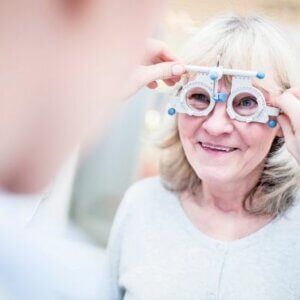
It’s always good to be prepared regardless of what type of doctor you’re seeing. People go to their primary care physician for different reasons and seeing your ophthalmologist is no different. Whether it’s a routine exam or a follow-up after cataract surgery, being prepared will help you communicate more clearly and allow us to help you even better.
The two most important items you’ll need when you come in for a comprehensive eye exam are your prescription glasses or contacts and your insurance information . Having your prescription eyewear handy will help us determine if it’s still the best prescription for you and having your insurance information on hand will help speed up the process of filling out paperwork. You can also download all of your patient forms online and fill them out before coming to your appointment!
Bring a pair of sunglasses if your eyes will be dilated during the exam. This process temporarily makes your eyes more sensitive to light, so you’ll be glad you brought them. You should also ask a friend or family member for a ride to and from your appointment if your eyes are dilated during your vision exam.
You should also bring a list of any vision problems you may be experiencing . This will help both you and your doctor stay on target and get to the bottom of what’s bothering you. It can also help to inform the staff of any problems you’re having when making your appointment so we can plan ahead for your visit.
Answering Your Eye Doctor’s Questions
We’ll have our own set of questions to ask during your appointment, so it’s a good idea to be thinking about them beforehand. They’re designed to help determine the current health of your eyes.
These questions may include:
- Have you had any previous vision problems?
- Have you had any recent health issues?
- Are you on any medications?
- Were you born prematurely?
- Have you had any previous eye surgery?
- Do you suffer from any allergies?
We’ll also want to know about your family’s health history . Your genetics play a critical role in the health of your vision, including your risk of eye problems such as macular degeneration, glaucoma, and retinal detachment.
We will also want to know if you have a family history of:
- Diabetes
- Heart disease
- High blood pressure
Your vascular health and blood sugar can have a significant effect on your eye health and vision. Being able to provide this information can help us look for symptoms and develop a plan to treat them.
How Eye Exams Protect Your Eye and Overall Health
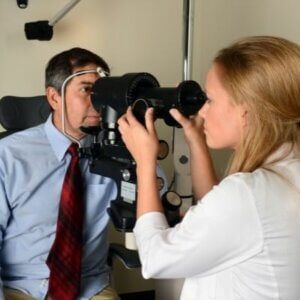
Comprehensive eye exams are essential for maintaining your overall health. Just like your yearly physical and regular dental appointments, they help you get treatment for immediate problems as well as to detect future ones. This helps you get the treatment you need much earlier and prevents larger issues further down the line.
Dilated eye exams are about more than simply updating your prescription. They help eye doctors to see the structures of the eye, including blood vessels in the back of your eyeball. This gives us insight into your overall health along with your vision health, making them an essential part of your preventative care routine.
During your exam, we look for a host of possible eye and overall health problems, including:
- Cataracts
- Glaucoma
- Macular degeneration
- Hypertension
- Diabetes
- Autoimmune diseases
Cataracts
Clouding of your eyes’ crystalline lens is known as cataracts . The lens is located behind the pupil, working with your cornea to focus light on the retina and create the images you see. Cataracts occur when the proteins in the eye begin to break down, often due to growing older. However, they can also be the result of genetics or other factors.
Cataracts are a slow-moving condition that can remain unnoticed for years. Dilated eye exams allow our team to catch them early and develop a treatment plan to help you retain your vision.
For more on cataracts, read Cataracts: Do I Have Them? And More of Your Questions Answered .
Glaucoma
Glaucoma is the result of damage to the optic nerve, often due to high pressure in the eye. The optic nerve connects your eye and brain, meaning that it becoming damaged can cause major vision loss.
It’s estimated that over 3 million Americans over the age of 40 have some form of glaucoma. Glaucoma isn’t reversible but can be managed with the right treatment and care. As the leading cause of blindness worldwide, it is crucial to get dilated eye exams to catch glaucoma early before it can steal any more of your vision.
To learn more about glaucoma, check out Glaucoma and Vision Loss: Am I At Risk of Going Blind?
Age-Related Macular Degeneration (AMD)
Macular degeneration results in losing your central vision. As your central vision deteriorates, it becomes harder to see what’s directly in front of you. Faces, fine print, and other objects become blurry instead of clear.
As the name suggests, AMD usually occurs as you get older. However, it can also be the result of your DNA. AMD isn’t curable, but it can be slowed down in some cases. Regular dilated eye exams help us catch it as early as possible and get you the treatment you need.
Check out our video and blog, Age-Related Macular Degeneration | FAQs with Dr. Adam Carrera , to learn more about AMD.
Hypertension
Comprehensive eye exams check more than your vision — they also give us insight into your overall health. Similar to cataracts and AMD, it can take years for hypertension to be visible in your eyes. On the other hand, they’re a signal to your eye doctor that you have high blood pressure.
Comprehensive eye exams can help sound the alarm against this “ silent killer .” With this knowledge, you can make the necessary nutritional and physical changes. Combined with medication, you can get your blood pressure back down to healthy levels. This will help prevent a heart attack as well as vision loss.
Diabetes
High blood sugar can damage the blood vessels throughout your body, including those in your eyes. This is known as diabetic retinopathy and it can result in vision loss if left untreated. With comprehensive eye exams, we can detect the microaneurysms associated with the disease and protect your long-term vision.
Read Diabetes and Vision: How High Blood Sugar Affects Eyesight to learn more!
Autoimmune Diseases
Autoimmune diseases occur when your body’s natural defense systems mistake your own cells for foreign ones. This results in your body essentially rebelling against itself and attacking its own healthy cells. There are over 80 different autoimmune disorders, each one affecting your body in a different way.
Common autoimmune diseases include:
- Psoriasis
- Psoriatic arthritis
- Rheumatoid arthritis
- Lupus
- Thyroid diseases (hyperthyroidism and hypothyroidism)
Common symptoms of autoimmune disorders include inflammation which can be detected with dilated eye exams. This tips us off that something is going on that needs to be treated immediately.
To learn more about the impotence of eye exams, read The Real Reason You Should Schedule a Dilated Eye Exam .
When should I get an eye exam?
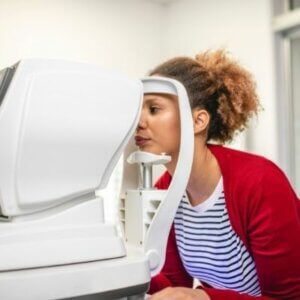
You know to get your physical once a year and go to your dentist every six months, but when should you get a comprehensive eye exam? The American Academy of Opthalmology (AAO) recommends getting them regularly and increasing intervals as you get older.
- Under 40: every 5 – 10 years
- 40 – 54: every 2 – 4 years
- 55 – 64: every 1 – 3 years
- 65+: every 1 – 2 years
Following the AAO’s suggestions is a great way to stay on top of your appointments and protect your eye health. However, there are some signs that it may be a good idea to schedule yours sooner than later.
You’ve Never Had a Dilated Eye Exam
If you’re in your 40s and have never had a comprehensive exam or can’t remember your last one, then it’s probably time to schedule that appointment. As we’ve discussed, these aren’t the same vision screenings that you got in school. They provide a deeper look into your eye to help catch vision and health problems before they become more serious.
You’re at Higher Risk for Eye Problems
There are multiple reasons why you may be at higher risk for eye problems, with genetics being the most significant. Your family history can play a factor in issues such as AMD, glaucoma, and diabetes.
You may also be at risk due to:
- Eye melanomas
- Eye injuries
- Steroids
Let us know if any of these apply to you. It helps us to look out for signs of problems and treat them immediately.
Want to learn more about when to schedule an eye exam? Read 7 Signs That It’s Time For Your Next Comprehensive Eye Exam to find out!
You Suffer from Allergies
Whether it’s seasonal allergies or the new family dog, allergies can leave you feeling downright miserable. What’s more, they can also affect your vision in a variety of ways. Allergy symptoms can vary and don’t always include sneezing, stuffy nose, and sniffling.
Instead, you may have eyes that are:
- Red
- Irritated
- Watery
While allergies may be the problem, there’s also a chance that something may be stuck in your eye. We can check your eye and remove any debris, as well as recommend eye drops or prescribe medication. You may be referred to an allergy specialist if your symptoms are severe.
You’ve Noticed Your Vision Getting Worse
You’ll experience noticeable changes in your vision as you get older. It may be squinting to read a street sign or holding a book far away to read the fine print. These problems start out small, but they can lead to major problems if not treated immediately. Dilated eye exams help us catch, document, and treat these issues so that you can continue enjoying the life you love.
You Get Headaches Around Your Eyes
Headaches are a regular part of life, but sometimes they may be a sign of a problem with your vision. Vision-related headaches are usually concentrated around your eyes and the front of your head.
This could mean that you:
- Need reading glasses
- Need progressive lenses
- Have a prescription that’s too strong
In some cases, it could mean that you’re experiencing reduced blood flow to the retina or have a retinal tear. Comprehensive eye exams allow us to diagnose the problem and prescribe the correct treatment.
It’s Harder to Drive at Night
Driving at night is dangerous enough, but changes in your vision can make it much worse. Farsightedness can make it difficult to read street signs or you may be experiencing glare from headlights which can lead to an accident.
Dilated exams can help address the problem with a stronger prescription, or you may need an anti-glare coating on your lenses. If aged 50 or older, this could also be a sign of cataracts. Talk to your doctor about creating a treatment plan until surgery becomes necessary.
Baptist Eye Surgeons has been providing surgical and medical vision care to Knoxville and the East Tennessee area since 1987. Dilated eye exams give us insight into the structures in your eye and allow us to observe your vision and overall health. We are able to diagnose issues that may have gone unnoticed and get you the treatment that you need.
Has it been a while since your last dilated eye exam? Contact us today to schedule your appointment!
Baptist Eye Surgeons is an ophthalmological practice in Knoxville, TN, and Morristown, TN. Give us a call at 865-579-3920 for more information or to schedule an appointment .