Meet Your Knoxville Eye Surgeons
Baptist Eye Surgeons is a group of exceptional eye surgeons who have dedicated themselves to restoring not just sight, but hope to patients in Knoxville, TN, and the surrounding areas. Our eye surgeons understand that behind every pair of eyes lies a unique story. Join us as we introduce these compassionate individuals dedicated to providing the highest quality of care.
Your Knoxville Eye Surgeons
Andrew Anzeljc, M.D
Dr. Andrew Anzeljc , a specialist in ophthalmology, joined Baptist Eye Surgeons in August 2018. His expertise lies in oculoplastic, tear duct, and orbital surgeries, focusing on areas surrounding the eyeball.
Dr. Anzeljc earned his medical degree from The Ohio State University College of Medicine in 2012. He completed his internship at Riverside Methodist Hospital in Columbus, Ohio, in 2013, followed by his ophthalmology residency at Emory University in Atlanta in 2016. Subsequently, he undertook a fellowship in oculoplastic and orbital surgery at Emory University in Atlanta in 2018 before becoming a part of Baptist Eye Surgeons.
In the realm of oculoplastic procedures , Dr. Anzeljc concentrates on two categories:
- Functional
- Cosmetic
Functional Procedures
The functional procedures performed by Dr. Anzeljc aim to enhance eye function and vision. These may encompass:
- Upper and lower eyelid surgery to improve vision
- Correction for excessive tearing or tear duct problems
- Rectification of eyelid defects
- Utilization of Botox for facial spasms and tearing
- Addressing inflammatory issues of the eyelids and orbit
- Treating orbital or eye socket tumors
Dr. Anzeljc emphasizes that many patients with drooping eyelids assume that surgical intervention is solely for cosmetic reasons. However, in cases where drooping eyelids hinder vision, procedures like blepharoplasty or ptosis repair are often deemed medically necessary and may be covered by insurance.
Cosmetic Procedures
The cosmetic procedures performed by Dr. Anzeljc are elective and aimed at enhancing a patient’s confidence in their appearance. These include:
- Botox for wrinkle reduction
- Application of facial fillers
- Blepharoplasty for eyelid lifting
- Lower eyelid blepharoplasty to diminish under-eye bags
- Brow lifts
Dr. Anzeljc encourages those interested in rejuvenating their appearance to seek consultations, stating:
A significant portion of patients are keen on improving signs of aging, but they may not know where to turn or feel hesitant to inquire. We offer numerous safe and effective non-surgical methods for facial rejuvenation. Cosmetic procedures are increasingly popular for both men and women, so if anyone is curious about botox , facial fillers , or other options in Knoxville, I encourage them to schedule a consultation.
Outside of his practice at Baptist Eye Surgeons, Dr. Anzeljc enjoys spending quality time with his wife, Samantha, and their sons, Luka, Micah, and Noah.
Marc A. Bodenheimer, M.D
Dr. Marc A. Bodenheimer obtained his Bachelor of Science in Electrical Engineering from the University of Tennessee in Knoxville, graduating Summa Cum Laude in 1988 as the top graduate in the College of Engineering. He further pursued his education at North Carolina State University in Raleigh, where he achieved a Master of Science in Electrical and Computer Engineering, again graduating Summa Cum Laude in 1990.
Subsequently, he earned his Doctor of Medicine degree from the Washington University School of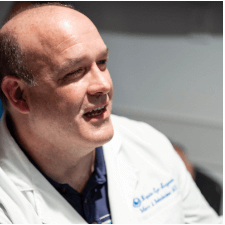 Medicine in St. Louis, MO in 1994. Dr. Bodenheimer completed his internship at The University of Tennessee School of Medicine in Chattanooga, TN from 1994 to 1995, followed by his residency in Ophthalmology from 1995 to 1998. Additionally, he undertook a fellowship at the University of South Florida School of Medicine in Tampa, FL, specializing in Cornea and External Disease from 1998 to 1999.
Dr. Bodenheimer stresses the importance of a proactive approach to preserving eyesight. Waiting until vision issues arise, such as blurriness or discomfort, often leads to delayed eye examinations. Even if vision appears normal, routine check-ups are crucial. They are often the only means to detect severe eye diseases before they cause irreversible damage.
Dr. Bodenheimer explains:
Many times, people come in with existing problems, only to realize that if they had come in a few years earlier, we could have prevented these issues. Treating them at this stage becomes much more challenging. It’s remarkable that one can lose vision in an eye without realizing it.
Early diagnosis offers the best chance at preserving sight. Several common eye diseases can lead to blindness before symptoms manifest. For instance, diabetic eye disease shows no early signs. Similarly, glaucoma , often called the ‘silent thief of sight’, lacks symptoms in its initial stages. Both conditions result in permanent vision loss.
Additionally, macular degeneration, the primary cause of blindness in Americans over 50 , advances silently early on. However, early treatment can slow its progression.
Once these diseases advance to affect vision, prevention of further loss becomes difficult. However, early detection is possible through a comprehensive eye examination , which should include dilation for a thorough evaluation, particularly of the optic nerve.
Dr. Bodenheimer underscores the criticality of annual comprehensive eye exams, including dilation, for individuals with a family history of diabetes, glaucoma, or macular degeneration. Waiting until vision blurs or squinting increases is not advisable. He urges patients to take a proactive stance toward their vision to ensure clear sight well into their later years.
Adam Carrera, M.D
Dr. Adam Carrera joined Baptist Eye Surgeons in August of 2020. Dr. Carrera is a highly skilled surgeon known for his dedication to fostering strong patient relationships. He makes sure to involve them in every aspect of their eye health and care.
Dr. Carrera brings a wealth of experience to his position at Baptist Eye Surgeons. This includes time served in the U.S. Air Force. He achieved a Magna Cum Laude B.S. in Cell and Molecular Biology from King University in 2011.
This was followed by the completion of his M.D. at East Tennessee State University’s Quillen College of Medicine in 2016. During his tenure at ETSU, he was honored with induction into the Alpha Omega Alpha Honor Medical Society.
After obtaining his medical degree, Dr. Carrera successfully finished a transitional internship at Methodist University Hospital in Memphis. He subsequently completed his residency at the Hamilton Eye Institute at the University of Tennessee, Memphis.
Dr. Carrera specializes in comprehensive ophthalmology, providing expert assistance to patients dealing with various eye diseases and conditions. He offers a range of services including:
One of Dr. Carrera’s greatest joys in practicing ophthalmology is the meaningful interactions he has with his patients. He loves ensuring they have a thorough understanding of their eye health.
I believe it’s crucial for patients to actively participate in their own care. I’m not simply prescribing a treatment and hoping they follow through. Patients tend to experience better outcomes when they comprehend their condition and recognize that the decisions they make are significant to me as well.
Janis L. Holt, M.D
Dr. Janis L. Holt became a valued member of Baptist Eye Surgeons in December 2019. She brings her specialized skills in cataract surgery as well as corneal disease and transplant procedures to both the Knoxville and Morristown locations.
With her extensive experience, Dr. Holt has performed numerous cutting-edge cataract surgeries and partial thickness corneal transplantations . Additionally, she takes great pleasure in assisting patients in understanding and managing conditions like:
- Glaucoma
- Diabetic eye diseases
- Macular degeneration
Dr. Holt has a personal connection to glaucoma within her own family. This has made her deeply committed to guiding patients through treatment options, empowering them to enhance their vision and quality of life. She emphasizes the potential for patients to regain control over their health, countering the notion that healthcare diminishes our agency.
She attained a Master of Science in Molecular Biology at Saint Louis University in St. Louis, MO, in 1996. She then completed her Doctorate in Medicine at SLU’s School of Medicine in 2001.
Dr. Holt finished her residency in Ophthalmology at the University of Florida College of Medicine in Gainesville, FL, in 2005. She completed a fellowship in Cornea, External Disease, and Refractive Surgery at Washington University School of Medicine in St. Louis, MO, in 2006.
Fueled by her history of teaching in a university environment, Dr. Holt brings a dedicated enthusiasm to educating patients about the well-being of their eyes. By providing patients with a deeper understanding of their eye function and potential issues, she empowers them to implement positive changes for improved eyesight, leading to a sense of relief and control.
Dr. Holt’s expertise extends to the use of cosmetic procedures, such as Botox, for clinical purposes like migraines and facial spasms, which has yielded notable success with her patients. Furthermore, she enjoys engaging with patients in need of glasses or contact lenses, introducing them to a wide range of intriguing options they may not have previously considered.
J. Franklin Murchison, M.D
Dr. J. Franklin Murchison, M.D . graduated as the second-ranking student in a class of 399 at Jackson Central Merry High School in Jackson, Tennessee, in June 1979. He pursued a degree in Chemistry at the University of Tennessee in Knoxville, TN, from 1979 to 1982, achieving Summa Cum Laude honors upon graduation.
Following this, he earned his M.D. at the University of Tennessee in Memphis (1982 – 1986). Dr. Murchison completed his internship at the University of Tennessee Hospital in Knoxville, TN (1986 – 1987), and his residency at Duke University Medical Center in Durham, North Carolina (1987 – 1990). Additionally, he undertook a fellowship in Cornea/External Disease (1990 – 1991) at Bascom Palmer Eye Institute in Miami, Florida.
Dr. Murchison has been part of our team since 1994. As a general ophthalmologist, he can address virtually any medical problem you may have with your eyes. Dr. Murchison also has quite a few specialties, including LASIK surgery . “We’ve been doing LASIK surgery since it began, pretty much,” he says.
Two structures in the eye focus light—your cornea and your lens. With LASIK, Dr. Murchison can change the shape of your cornea to improve your vision. This is accomplished by creating a flap with one laser. A second laser is used to reshape the cornea and make vision corrections to your distance vision.
This may help alleviate your need for glasses or contacts. Keep in mind that the procedure can’t be performed if you have cataracts.
Speaking on his years providing LASIK, Dr. Murchison says:
It’s been quite amazing, and it’s been going on since 1999 so we’ve been doing it for a long time. There have been updates in technology which have made it a much more effective procedure.
LASIK can be performed if you’re over the age of 40. However, this is the time that presbyopia sets in—a natural condition that makes it hard to focus on objects that are up close. In this case, you may still need reading glasses at certain times.
The procedure is painless thanks to topical anesthetic and anxiety medication. Patients report feeling pressure from a suction ring that’s used, but that’s the extent of it. The entire procedure takes about 20 minutes on average and you can usually return to normal activities very quickly.
Another benefit of LASIK is that it doesn’t require a hospital stay. According to Dr. Murchison, “It’s usually pretty quick. You go home, and with the valium on board, you’ll typically sleep for most of the day. This also really helps the recovery of the eye.”
Austin Nave, M.D.
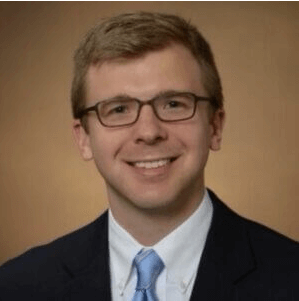 Dr. Austin Nave
joined us in August of 2023, bringing his East Tennessee roots and expertise in comprehensive ophthalmology. His patient-centered care aligns seamlessly with our mission. Dr. Nave excelled at the University of Tennessee, earning a Bachelor of Science with honors, followed by a Doctor of Medicine from ETSU’s Quillen College of Medicine. He honed his skills at the University of Alabama, Birmingham, staying current with the latest in eye care.
Dr. Austin Nave
joined us in August of 2023, bringing his East Tennessee roots and expertise in comprehensive ophthalmology. His patient-centered care aligns seamlessly with our mission. Dr. Nave excelled at the University of Tennessee, earning a Bachelor of Science with honors, followed by a Doctor of Medicine from ETSU’s Quillen College of Medicine. He honed his skills at the University of Alabama, Birmingham, staying current with the latest in eye care.
Specializing in cataract surgery, Dr. Nave rejuvenates patients’ vision. He offers various glaucoma treatments, minimizing the need for daily medication through laser procedures.
Dr. Nave also handles:
- Eyelid procedures
- Diabetic retinopathy
- General ophthalmology
His patient-centric approach emphasizes trust and communication. He educates patients on their conditions and involves them in decision-making, empowering them in their eye care journey.
I went into medicine because I am passionate about taking care of people and that’s why you go into medicine—to be there when people need you.
Passionate about revitalizing eyesight, Dr. Nave returned to East Tennessee to enhance eye care. “I’m excited to be back home in Sevierville ,” he says, “Seeing patients at all our locations, and giving back to the communities that have supported me over the years.”
In his downtime, Dr. Nave enjoys outdoor adventures with his lab, Hank, and supports the UT Vols. A Star Wars enthusiast, he often references his favorite films. Dr. Nave’s skills and enthusiasm promise a valuable addition to our practice. His devoted care and investment in each patient make him a valued asset.
I couldn’t have asked for a better group of doctors to join, the coworkers and staff are all so supportive.
Paul Benjamin Pruett, M.D
Dr. Paul Pruett pursued his undergraduate studies at the University of Tennessee, Knoxville, focusing on Biochemistry and Cellular and Molecular Biology. Subsequently, he excelled in medical school at Emory University, graduating with high honors (magna cum laude).
He continued his training with an internship and ophthalmology residency at Emory University, where he had the honor of serving as Chief Resident in his final year. Additionally, he dedicated a year to a fellowship program specializing in the medical and surgical management of glaucoma at Emory.
Like many of our other surgeons, Dr. Pruett has a wide range of interests and specialties. One of these is glaucoma surgery , of which he says, “I’m a glaucoma specialist as well as practicing general ophthalmology. I treat mostly patients that have glaucoma or look suspicious. But I also do general ophthalmology including cataract surgery and treating dry eyes. That kind of thing.”
Glaucoma is an issue with the optic nerve , which is the cable that connects the eyeball to the brain. “The optic nerve can progressively get damaged over time,” explains Dr. Pruett, “generally related to pressure in the eye. This leads to peripheral vision loss working its way forward into the patient’s vision. The problem being that, once the vision loss occurs, it’s permanent. You can’t bring it back once it’s gone.”
Glaucoma isn’t a single disease but a spectrum of issues. “I like to say that the majority of glaucoma cases are caused by birthdays. The natural draining of the eyes can lose function and the pressure in the eyes can go up. As it goes up, it can damage the optic nerve.” Other conditions can cause glaucoma , including genetic conditions and uncontrolled diabetes.
Glaucoma can become necessary for different reasons. One is if medications, often eye drops, aren’t working. The second and likely most common reason is if they aren’t tolerated by the body. “All medicines have potential side effects,” says Dr. Pruett. “If those side effects overwhelm the patient then we can use surgery to lower the pressure.”
Glaucoma surgery falls into two wide categories:
- Creating a new way for fluid to get out of the eye
- Making the natural drain of the eye work better
Glaucoma can’t be cured. Fortunately, it can be controlled with surgery. Noting the experience of previous patients, Dr. Pruett says, “There are patients that have had glaucoma surgery decades ago that haven’t had to do anything to treat their glaucoma. However, their glaucoma is still there.”
Darin S. Smith, M.D
Dr. Darin Smith has been with us since 1998. He specializes in comprehensive ophthalmology, with a primary focus on cataract and LASIK surgeries. However, he also does a lot of work with cataract surgery and the implantation of intraocular lenses , or IOLs for short.
According to Dr. Smith, “What we do with cataract surgery is we remove the natural cloudy lens and replace that with a clear, plastic lens implant. A lens implant is just a silicone or acrylic lens implant that goes inside the eye after cataract surgery.”
He explains the different types of IOLs by saying:
There are three different types of intraocular lenses. The first one is considered a standard lens, which is usually covered by insurance. That will help for distance or up-close vision but not both. It also doesn’t help with astigmatism, which has to do with the curvature of the cornea. The second type is known as a toric lens that is for correcting astigmatism so people can get out of glasses for either distance or up-close vision, but not both. The third type is multifocal lenses, which can fix everything — distance, up-close, and treating astigmatism. The idea there is to try to get out of glasses for everything.
To put it another way, IOLs come in three main types:
- Standard
- Toric
- Multifocal
Each comes with its unique benefits. IOLs are necessary once cataracts progress to the point requiring surgery.
Standard lenses are typically covered by insurance. They aid either distance or close-up vision but not both, and do not correct astigmatism. Toric lenses correct astigmatism, aiming to reduce dependency on glasses or contacts for either distance or close-up vision, but not both.
Multifocal lenses offer comprehensive vision correction, addressing distance, close-up vision, and astigmatism. They aim to reduce glasses dependency across all aspects of vision. Light adjustable lenses (LALs) are the newest option for IOLs.They are adjusted after your surgery using UV light to give you the best prescription possible.
Erik Sweet, M.D.
Dr. Erik Sweet joined our practice in July 2020. Dr. Sweet is a dedicated comprehensive ophthalmologist known for his patient-centric approach and commitment to education.
Dr. Sweet’s educational journey began with a Bachelor’s degree in Science and Biochemistry from the State University of New York at Genesco. Following this, he pursued an Associate degree in Business at Oakland Community College before embarking on his medical career. He obtained his medical degree from the William Beaumont School of Medicine at Oakland University in Michigan.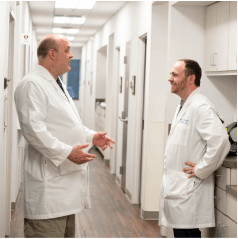
Specializing in comprehensive ophthalmology, Dr. Sweet values the ability to offer a wide range of treatments, setting him apart from specialists who focus on specific areas. His expertise includes administering intravitreal injections for retinal pathologies, performing various cataract surgery procedures, and conducting office-based treatments like eyelid lesion removal.
It’s not a see you once, treat the problem, and then it’s done, never see you again situation. It’s kind of like primary care where sometimes you end up seeing patients for 20, 30, 40 years and can build relationships. But it’s also something that’s surgical so when there is a major problem that needs to be taken care of, then often surgery can do that.
Moreover, he is skilled in addressing glaucoma through both minimally invasive surgery and laser treatments. He also provides comprehensive care for conditions such as:
- Diabetes
- Diabetic retinopathy
- Diabetic macular edema
Dr. Sweet’s dedication to ophthalmology was ignited during a medical mission trip, where he recognized the global and local need for comprehensive eye care. He values the long-term relationships formed with patients, emphasizing the continuity of care in ophthalmology.
His practice philosophy aligns with involving patients in decision-making, ensuring they fully understand their options. Dr. Sweet’s business background underscores the importance of effective communication and education in patient care. He prioritizes making patients feel heard and valued, dispelling misconceptions about ophthalmic treatments and surgeries.
In his personal life, Dr. Sweet cherishes time spent with his family. They relish outdoor activities like hiking, swimming, and kayaking. Additionally, he looks forward to his annual international “manventure,” an adventure-filled trip shared with close friends.
Do you need to meet with an eye surgeon in Knoxville? Contact us today to schedule your appointment!
Located in Knoxville, TN, Baptist Eye Surgeons is a team of highly skilled surgeons dedicated to restoring sight and instilling hope in their patients. Book an appointment today to receive exceptional eye care and regain your vision and hope.
Baptist Eye Surgeons is an ophthalmological practice in Knoxville, TN, Morristown, TN, and Sevierville, TN. Give us a call at 865-579-3920 for more information or to schedule an appointment .